
Chinese Medicines Herbarium Laboratories
The Chinese Medicines Herbarium Laboratories (CMHL) are dedicated to the collection, identification, preservation, display, and research of various specimens of Chinese medicines and other herbal medicines. The herbarium’s collections documented the information and changes of medicinal species over time while promoting public knowledge and the inheritance of Chinese medicine culture. All specimens are authenticated by authoritative experts, with traceability established by collecting source plants and medicinal materials from the same geographical area to ensure genuineness.
A key feature of the CMHL is its systematic display illustrating the entire lifecycle of Chinese medicines from the source plant and crude drug to the processed decoction pieces and finished proprietary Chinese medicines(pCm). The laboratories feature a transparent glass partition design, allowing visitors to gain thorough understanding of activities such as specimen preparation and conservation.
Showcasing approximately 3,500 CM specimens, the CMHL provides the essential physical basis for scientific research, testing and comparative identification of Chinese medicines. The herbarium’s collection includes a variety of special exhibits:
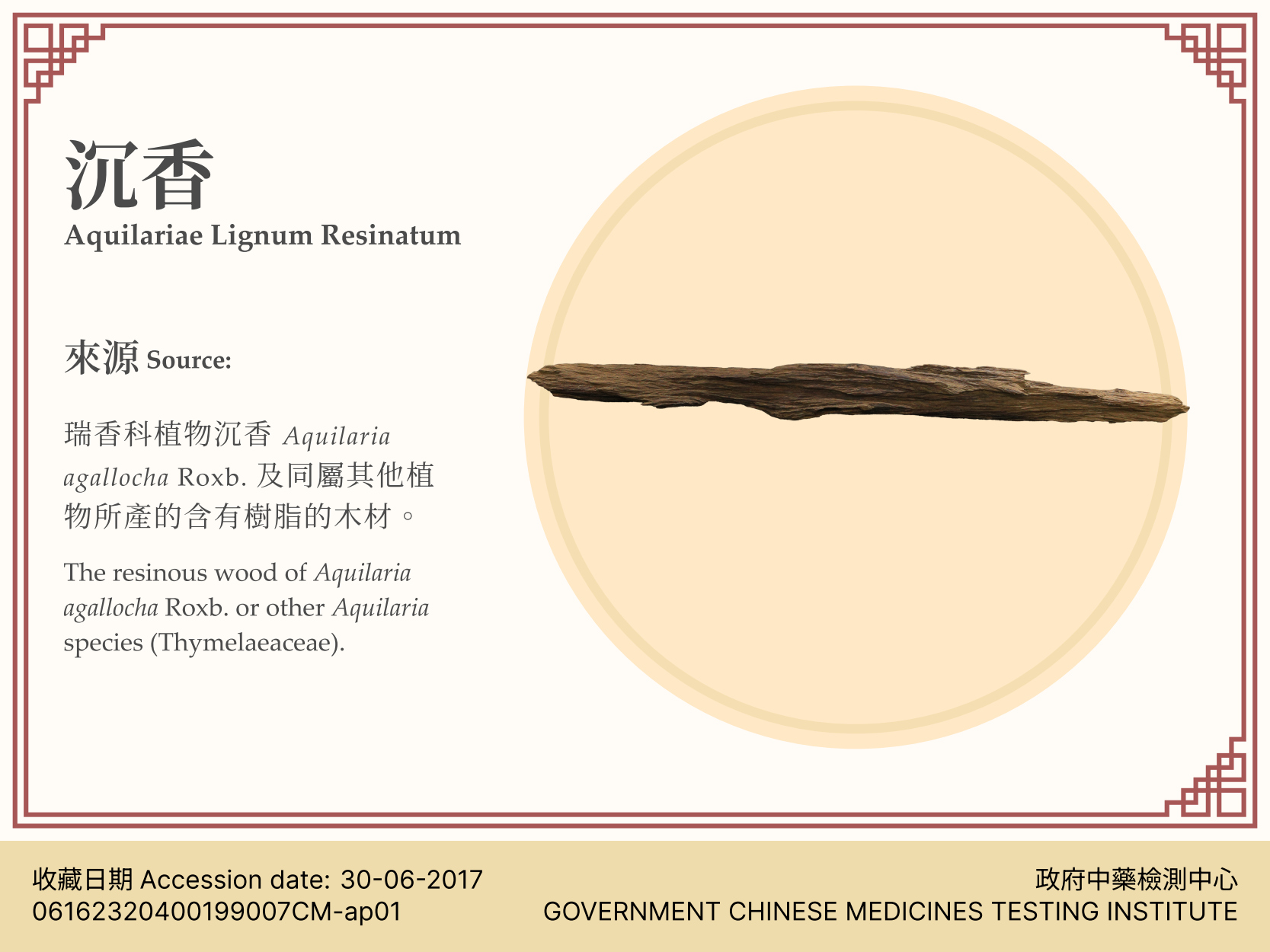
Voucher Specimens for the Hong Kong Chinese Materia Medica Standards are housed in the collection.
Precious Gifts from the National Medical Products Administration, including a notable set of Cordyceps specimens that show the medicine in different growth stages and from various places of origin.
Specimens of Endangered Species are also on display, highlighting the importance of sustainable development of medicinal resources, including Aquilariae Lignum Resinatum specimens.

As an important milestone on the innovative application of Chinese medicine data, GCMTI launched the Digital Herbarium for Chinese Medicines (DHCM) website (www.cmherbarium.gov.hk) on 26th March 2024. Through systematic digitalisation of Chinese medicines specimens into a digital collection that covers high-resolution pictures and related data of hundreds of commonly-used Chinese medicines and their source plants, the DHCM is the first online herbarium of its kind that provides comprehensive information on Chinese medicines, and also the first in the world to use photogrammetry in producing three-dimensional (3D) images on traceable Chinese materia medica specimens through reconstruction of the spatial structure and 3D shape of each object. The DHCM currently provides data on plant specimens, medicinal material specimens, microscopic slice data, chemical data, and DNA data, establishing the traceability between Chinese medicines specimens and their source species through scientific analysis.
The DHCM is a user-friendly, freely accessible digital resource for the public, professionals from the Chinese medicine sector, testing and certification sector, as well as education and research institutions.
Cultural Wall
To let more people understand the culture of Chinese medicine and its significance, the CMHL feature a cultural wall that showcases the culture, history, wisdom, heritage, and international influence of Chinese medicine.
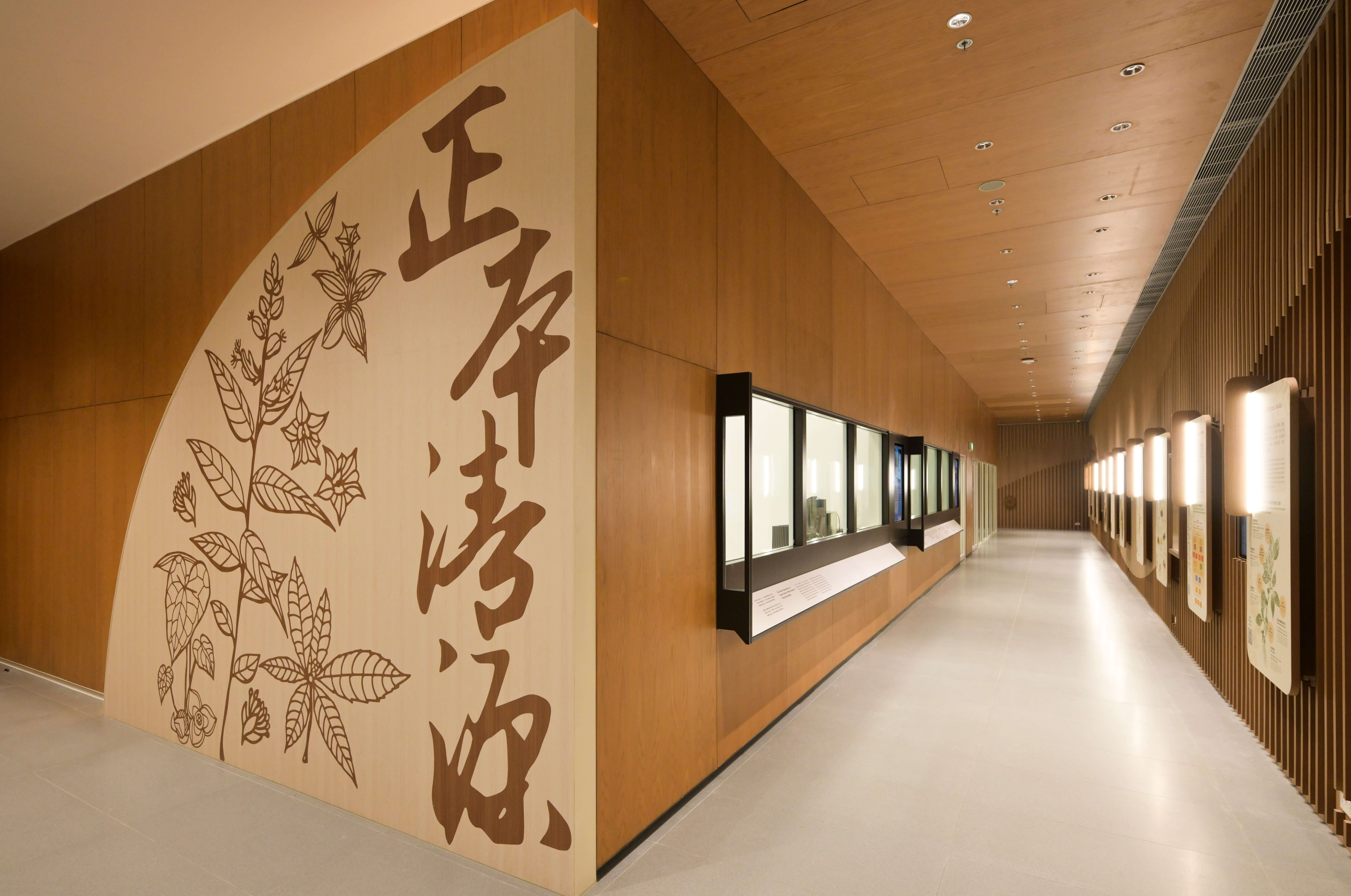
The cultural wall is divided into three sections, each introducing a different theme:
Section 1: A Comprehensive View of Chinese Medicines
Beginning with the long history of Chinese medicine, this section explores how traditional knowledge is integrated with modern technology to promote the standardisation and modernisation of Chinese medicines, reflecting both its inheritance and innovation.
Section 2: Chinese Medicine and Hong Kong
This section highlights the deep-rooted connection between Chinese medicine and Hong Kong, reviewing the development of Chinese medicine in the city and illustrating how traditional Chinese medicine has become part of everyday life for Hong Kong people.
Section 3: Reaching the World
Showcasing how the GCMTI actively promotes testing, standardisation, and the internationalisation of Chinese medicine. This section demonstrates efforts to help Chinese medicine go global.
Our Work
As a Chinese medicines herbarium of international standard, the CMHL will collect specimens of Chinese Materia Medica (CMM) and animal/plant voucher continuously and conduct identification, processing and maintenance for these specimens by using scientific method, providing important physical basis for scientific testing and comparative identification.
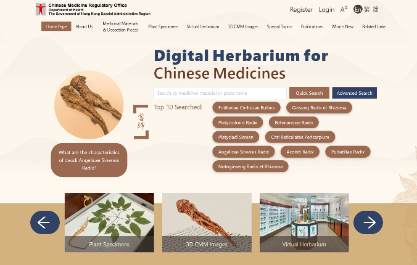
At the same time, GCMTI is systematically digitising Chinese medicines specimens and uploading the digital collection to the “Digital Herbarium for Chinese Medicines” (DHCM) website (www.cmherbarium.gov.hk), covering high-resolution pictures and related data of hundreds of commonly-used Chinese medicines and their source plants. The DHCM is a free, always accessible digital resource for the public, Chinese medicine sector, as well as international research institutions, to identify CMM.