Chinese Medicine Regulatory Office
Site Menu
 Home >
Useful Information > Publication & Guidelines > Government Chinese Medicines
Testing Institute > Pamphlet on Government Chinese Medicines Testing Institute
Home >
Useful Information > Publication & Guidelines > Government Chinese Medicines
Testing Institute > Pamphlet on Government Chinese Medicines Testing Institute
Pamphlet on Government Chinese Medicines Testing Institute
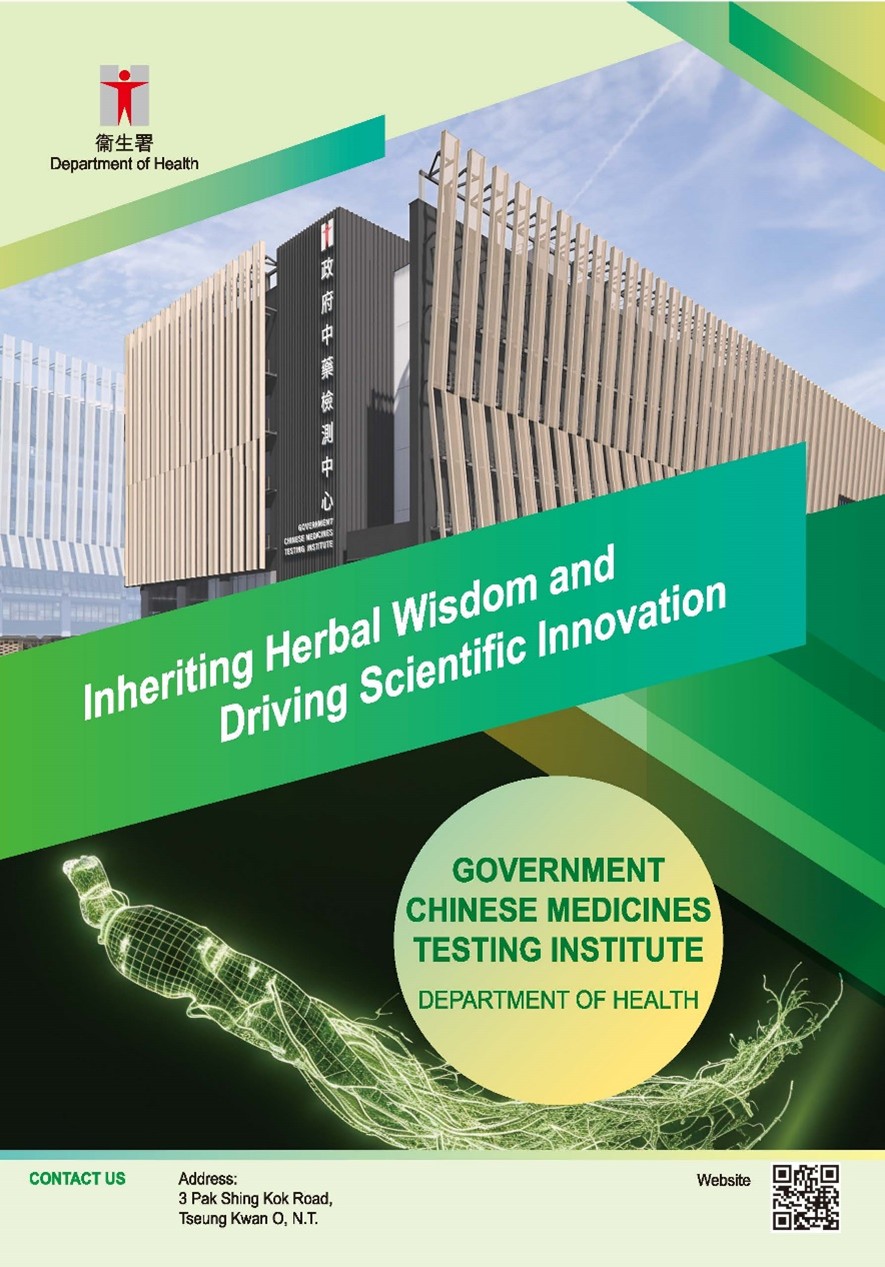
Inheriting Herbal Wisdom and Driving Scientific Innovation
GOVERNMENT CHINESE MEDICINES TESTING INSTITUTE
DEPARTMENT OF HEALTH
CONTACT US
Address:
3 Pak Shing Kok Road, Tseung Kwan O, N.T.
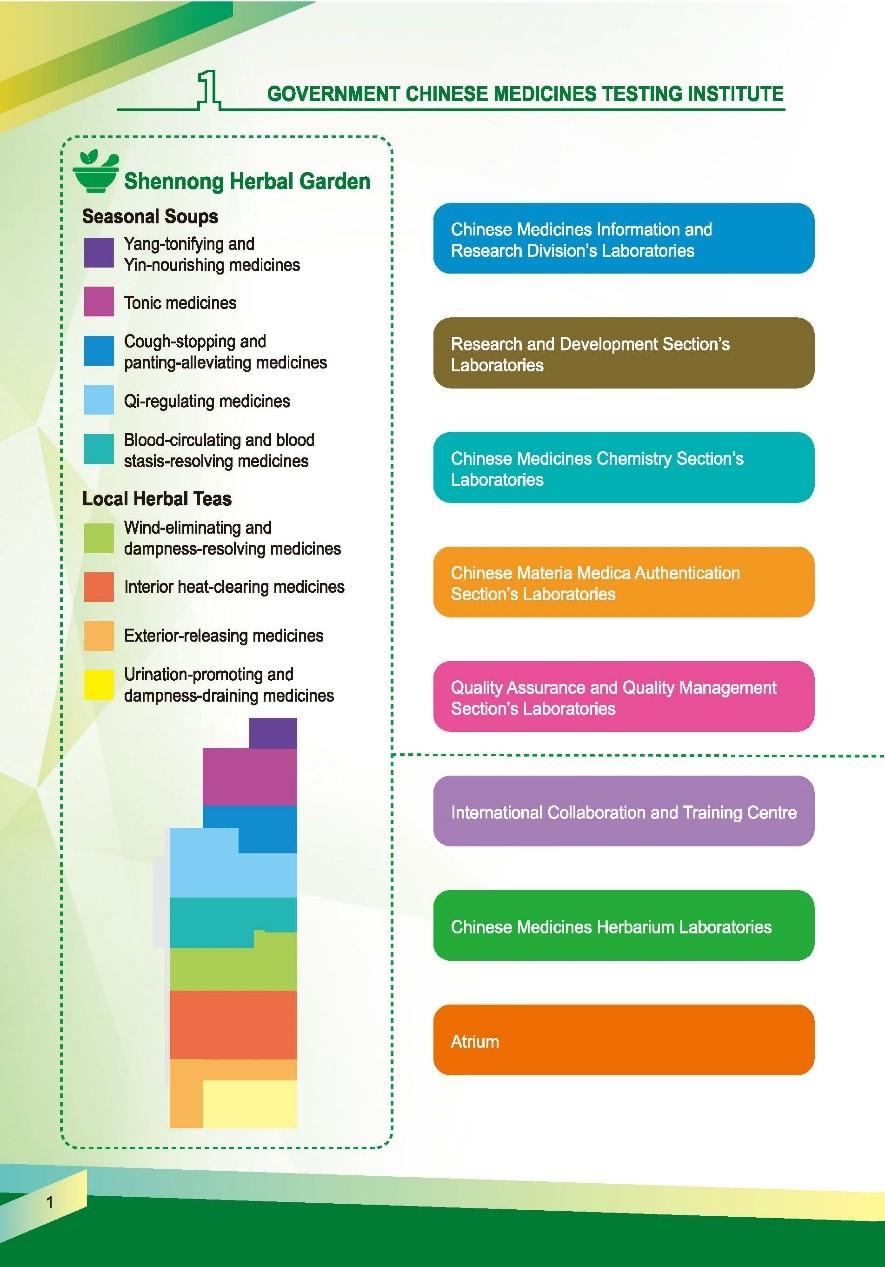
GOVERNMENT CHINESE MEDICINES TESTING INSTITUTE
Shennong Herbal Garden
Seasonal Soups
Yang-tonifying and Yin-nourishing medicines
Tonic medicines
Cough-stopping and panting-alleviating medicines
Qi-regulating medicines
Blood-circulating and blood stasis-resolving medicines
Local Herbal Teas
Wind-eliminating and dampness-resolving medicines
Interior heat-clearing medicines
Exterior-releasing medicines
Urination-promoting and dampness-draining medicines
Chinese Medicines Information and Research Division’s Laboratories
Research and Development Section’s Laboratories
Chinese Medicines Chemistry Section’s Laboratories
Chinese Materia Medica Authentication Section’s Laboratories
Quality Assurance and Quality Management Section’s Laboratories
International Collaboration and Training Centre
Chinese Medicines Herbarium Section’s Laboratories
Atrium
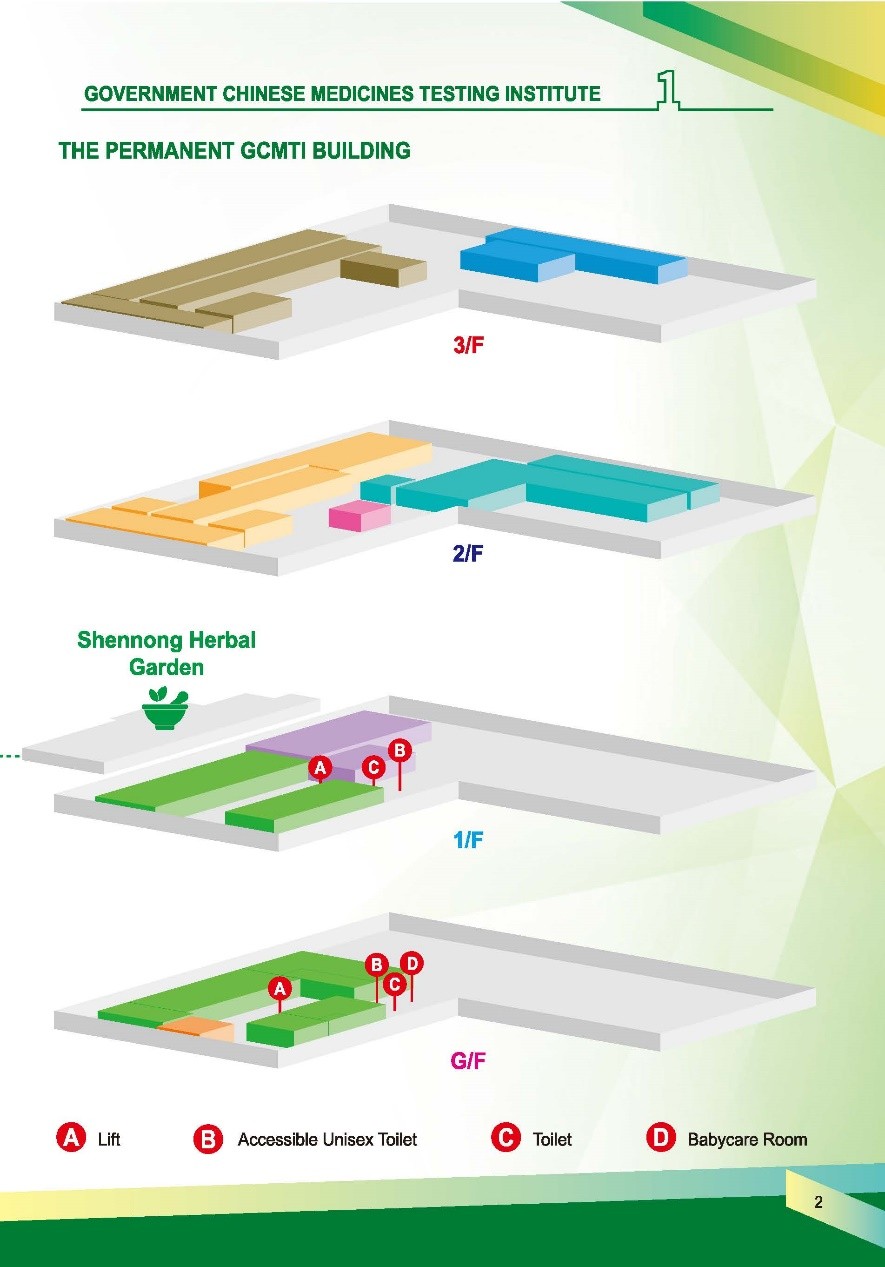
GOVERNMENT CHINESE MEDICINES TESTING INSTITUTE
THE PERMANMENT GCMTI BUILDING
3/F
2/F
1/F
G/F
Shennong Herbal Garden
A Lift
B Accessible Unisex Toilet
C Toilet
D Babycare Room
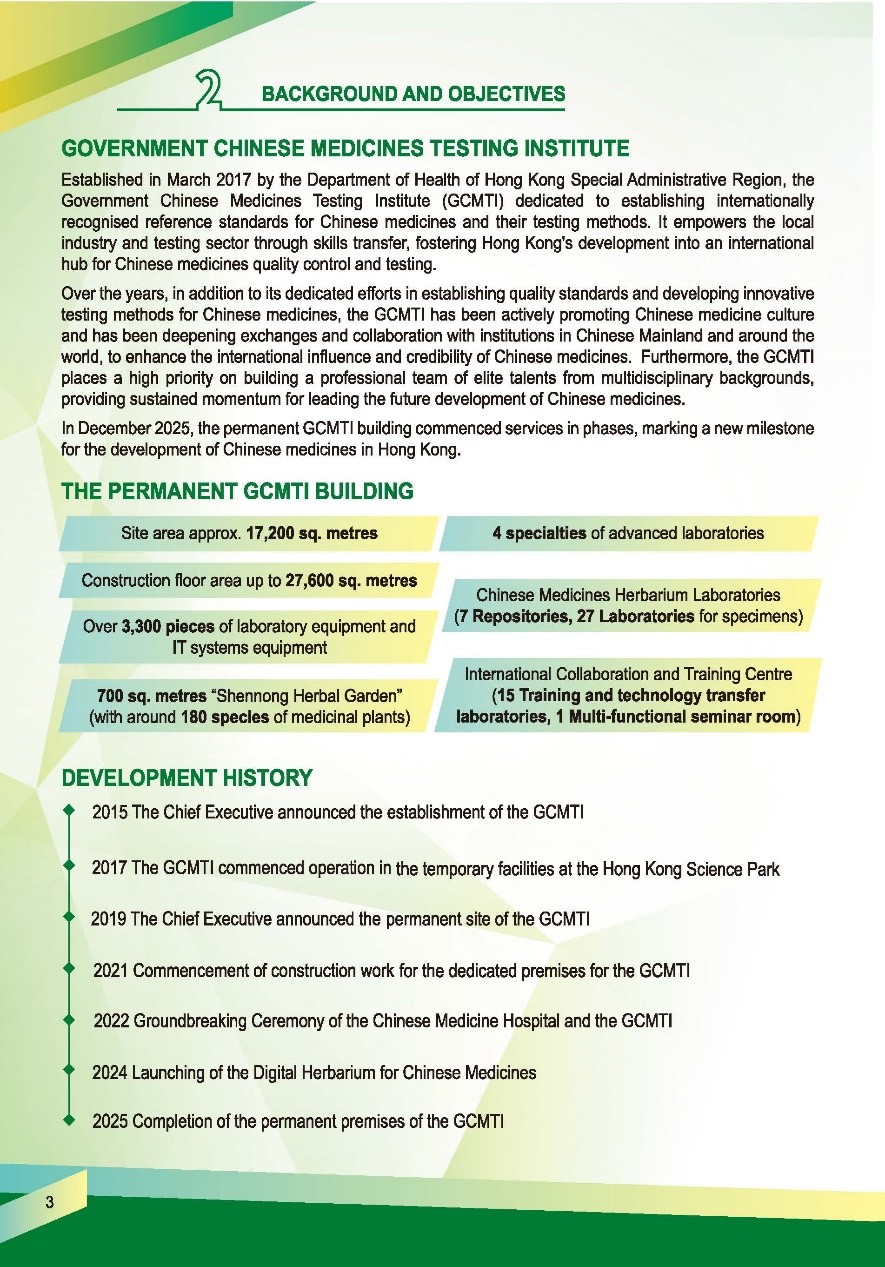
BACKGROUND AND OBJECTIVES
GOVERNMENT CHINESE MEDICINES TESTING INSTITUTE
Over the years, in addition to its dedicated efforts in establishing quality standards and developing innovative testing methods for Chinese medicines, the GCMTI has been actively promoting Chinese medicine culture and has been deepening exchanges and collaboration with institutions in Chinese Mainland and around the world, to enhance the international influence and credibility of Chinese medicines. Furthermore, the GCMTI places a high priority on building a professional team of elite talents from multidisciplinary backgrounds, providing sustained momentum for leading the future development of Chinese medicines.
In December 2025, the permanent GCMTI building commenced services in phases, marking a new milestone for the development of Chinese medicines in Hong Kong.
THE PERMANENT GCMTI BUILDING
Construction floor area up to 27,600 sq. metres
Over 3,300 pieces of laboratory equipment and IT systems equipment
700 sq. metres “Shennong Herbal Garden” (with around 180 species of medicinal plants)
4 specialties of advanced laboratories
Chinese Medicines Herbarium Laboratories (7 Repositories, 27 Laboratories for specimens)
International Collaboration and Training Centre (15 Training and technology transfer laboratories, 1 Multi-functional seminar room)
DEVELOPMENT HISTORY
- 2015 The Chief Executive announced the establishment of the GCMTI
- 2017 The GCMTI commenced operation in the temporary facilities at the Hong Kong Science Park
- 2019 The Chief Executive announced the permanent site of the GCMTI
- 2021 Commencement of construction work for the dedicated premises for the GCMTI
- 2022 Groundbreaking Ceremony of the Chinese Medicine Hospital and the GCMTI
- 2024 Launching of the Digital Herbarium for Chinese Medicines
- 2025 Completion of the permanent premises of the GCMTI
BACKGROUND AND OBJECTIVES
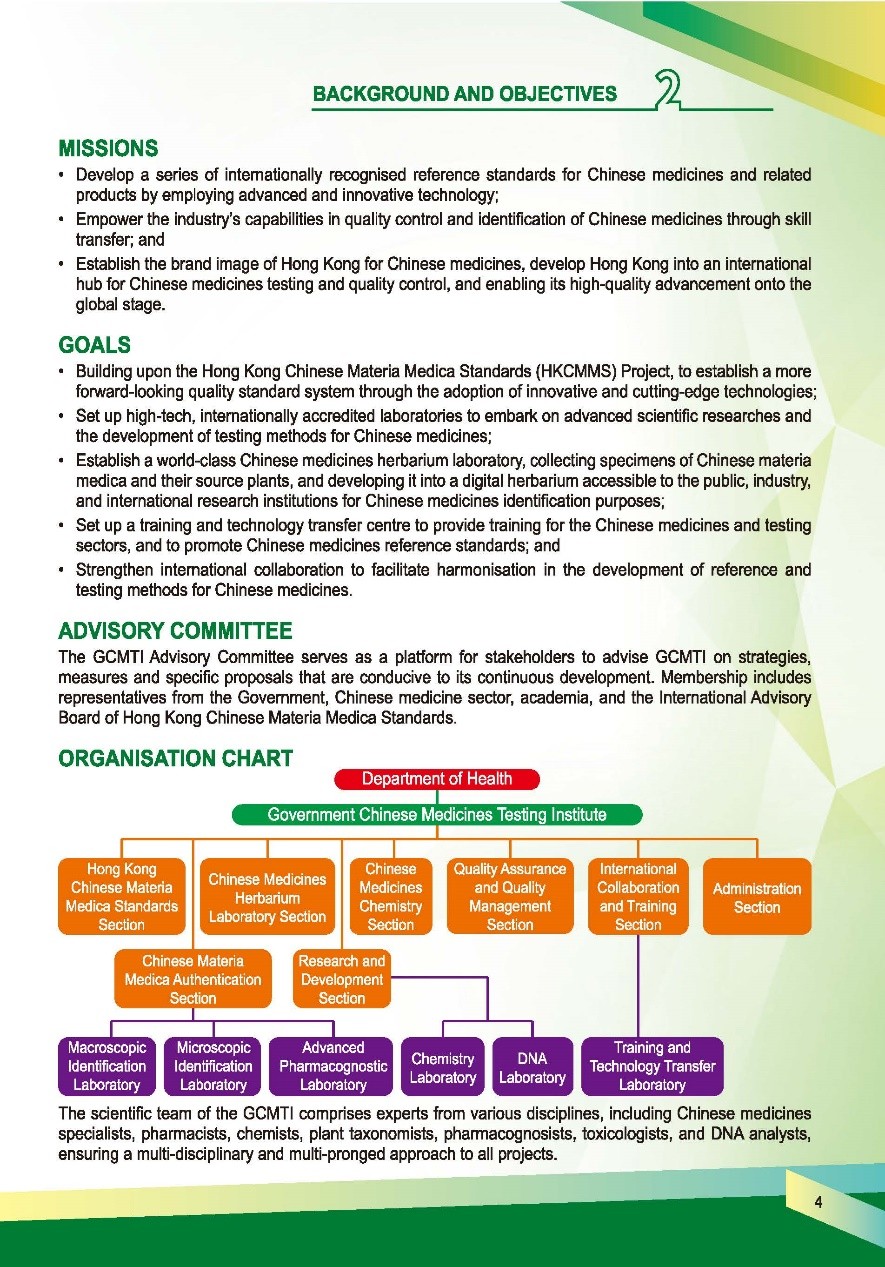
MISSIONS
- Develop a series of internationally recognised reference standards for Chinese medicines and related products by employing advanced and innovative technology;
- Empower the industry’s capabilities in quality control and identification of Chinese medicines through skill transfer; and
- Establish the brand image of Hong Kong for Chinese medicines, develop Hong Kong into an international hub for Chinese medicines testing and quality control, and enabling its high-quality advancement onto the global stage.
- Building upon the Hong Kong Chinese Materia Medica Standards (HKCMMS) Project, to establish a more forward-looking quality standard system through the adoption of innovative and cutting-edge technologies;
- Set up high-tech, internationally accredited laboratories to embark on advanced scientific researches and the development of testing methods for Chinese medicines;
- Establish a world-class Chinese medicines herbarium laboratory, collecting specimens of Chinese materia medica and their source plants, and developing it into a digital herbarium accessible to the public, industry, and international research institutions for Chinese medicines identification purposes;
- Set up a training and technology transfer centre to provide training for the Chinese medicines and testing sectors, and to promote Chinese medicines reference standards; and
- Strengthen international collaboration to facilitate harmonisation in the development of reference and testing methods for Chinese medicines.
ADVISORY COMMITTEE
Department of Health
Government Chinese Medicines Testing Institute
Hong Kong Chinese Materia Medica Standards Section
Chinese Materia Medica Authentication Section
Chinese Medicines Herbarium Laboratory Section
Research and Development Section
Chinese Medicines Chemistry Section
Quality Assurance and Quality Management Section
International Collaboration and Training Section
Administration Section
Macroscopic Identification Laboratory
Microscopic Identification Laboratory
Advanced Pharmacognostic Laboratory
Chemistry Laboratory
DNA Laboratory
Training and Technology Trans
CHINESE MEDICINES HERBARIUM LABORATORIES
CHINESE MEDICINES HERBARIUM LABORATORIES
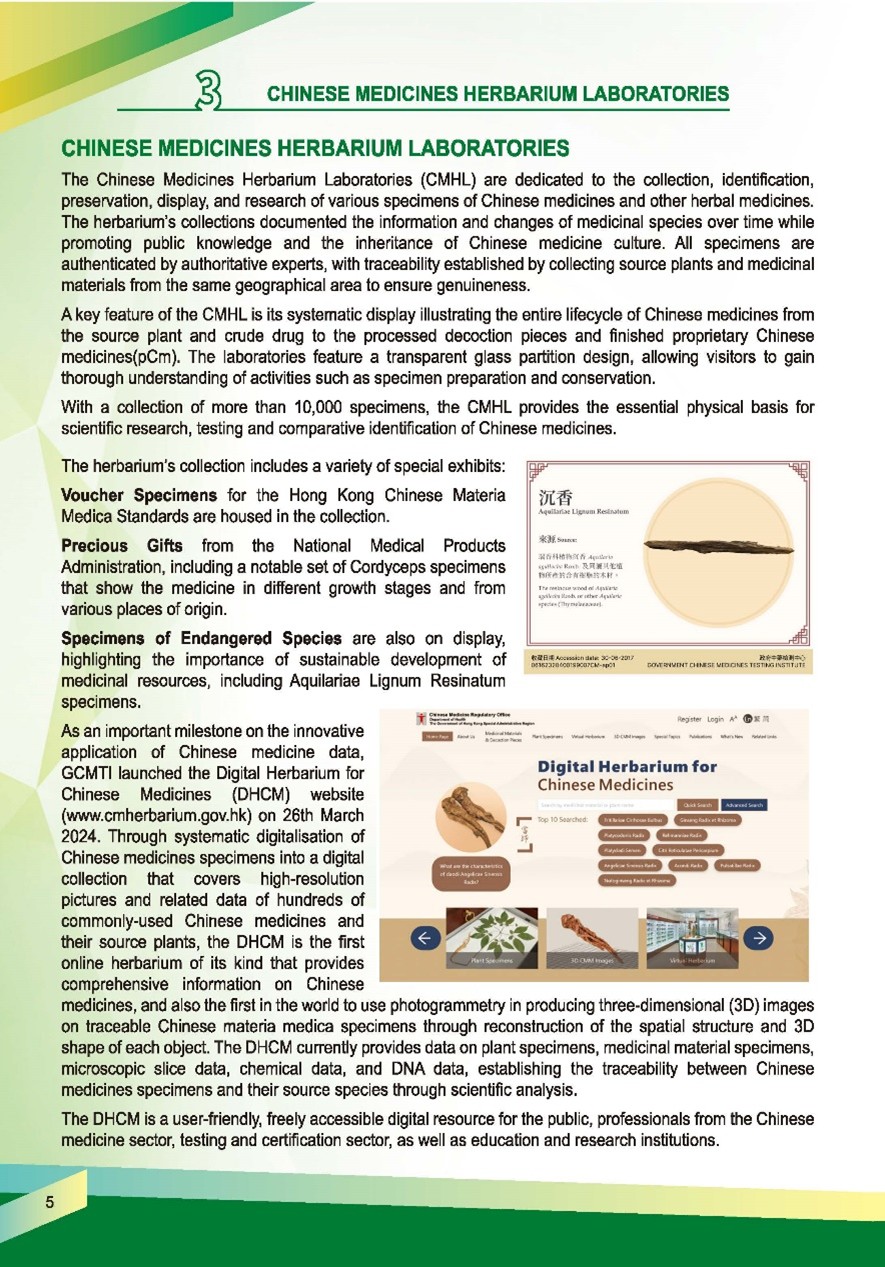
A key feature of the CMHL is its systematic display illustrating the entire lifecycle of Chinese medicines from the source plant and crude drug to the processed decoction pieces and finished proprietary Chinese medicines(pCm). The laboratories feature a transparent glass partition design, allowing visitors to gain thorough understanding of activities such as specimen preparation and conservation.
With a collection of more than 10,000 specimens, the CMHL provides the essential physical basis for scientific research, testing and comparative identification of Chinese medicines.
The herbarium’s collection includes a variety of special exhibits:
Voucher Specimens for the Hong Kong Chinese Materia Medica Standards are housed in the collection.
Precious Gifts from the National Medical Products Administration, including a notable set of Cordyceps specimens that show the medicine in different growth stages and from various places of origin.
Specimens of Endangered Species are also on display, highlighting the importance of sustainable development of medicinal resources, including Aquilariae Lignum Resinatum specimens.
As an important milestone on the innovative application of Chinese medicine data, GCMTI launched the Digital Herbarium for Chinese Medicines (DHCM) website (www.cmherbarium.gov.hk ) on 26th March 2024. Through systematic digitalisation of Chinese medicines specimens into a digital collection that covers high-resolution pictures and related data of hundreds of commonly-used Chinese medicines and their source plants, the DHCM is the first online herbarium of its kind that provides comprehensive information on Chinese medicines, and also the first in the world to use photogrammetry in producing three-dimensional (3D) images on traceable Chinese materia medica specimens through reconstruction of the spatial structure and 3D shape of each object. The DHCM currently provides data on plant specimens, medicinal material specimens, microscopic slice data, chemical data, and DNA data, establishing the traceability between Chinese medicines specimens and their source species through scientific analysis.
The DHCM is a user-friendly, freely accessible digital resource for the public, professionals from the Chinese medicine sector, testing and certification sector, as well as education and research institutions.
LABORATORIES AND EQUIPMENT
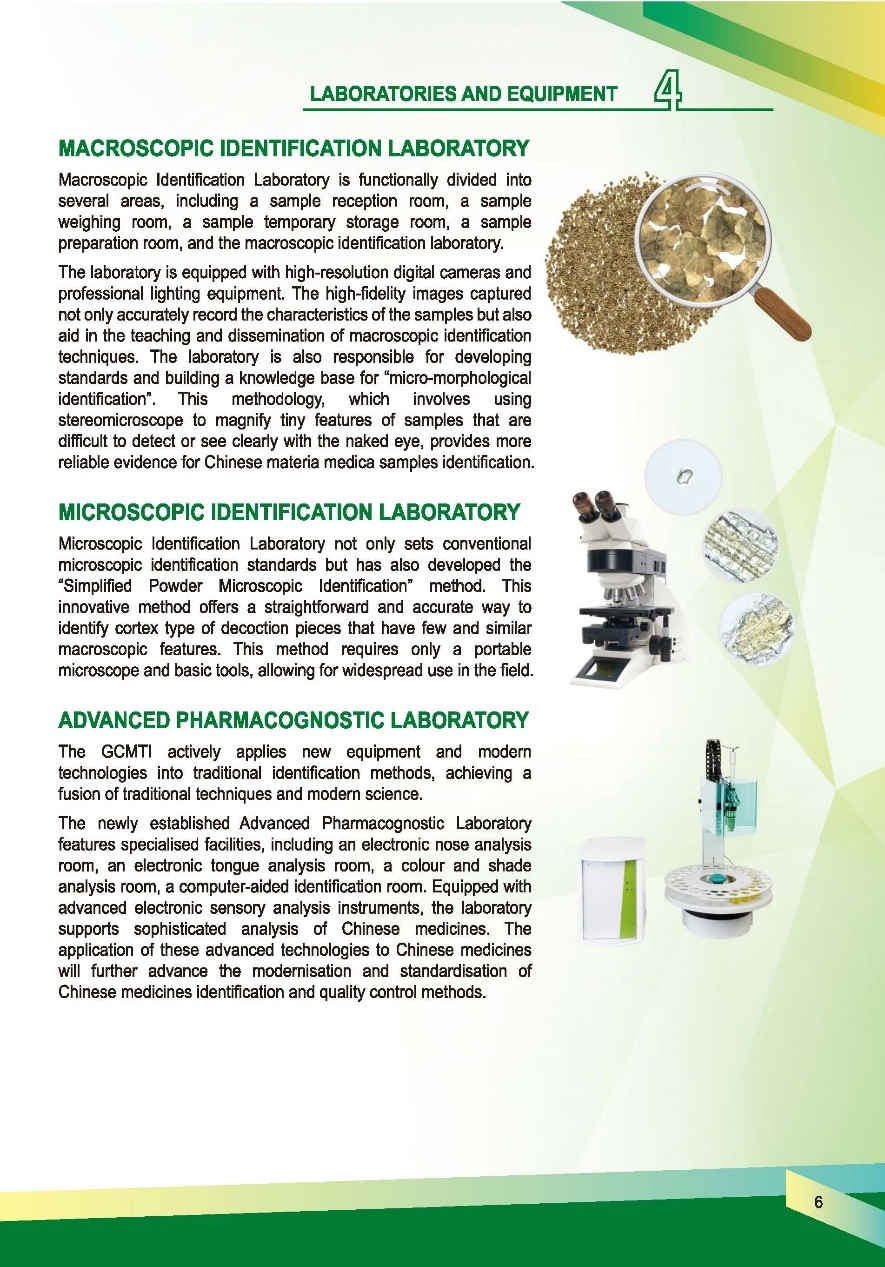
MACROSCOPIC IDENTIFICATION LABORATORY
The laboratory is equipped with high-resolution digital cameras and professional lighting equipment. The high-fidelity images captured not only accurately record the characteristics of the samples but also aid in the teaching and dissemination of macroscopic identification techniques. The laboratory is also responsible for developing standards and building a knowledge base for “micro-morphological identification”. This methodology, which involves using stereomicroscope to magnify tiny features of samples that are difficult to detect or see clearly with the naked eye, provides more reliable evidence for Chinese materia medica samples identification.
The newly established Advanced Pharmacognostic Laboratory features specialised facilities, including an electronic nose analysis room, an electronic tongue analysis room, a colour and shade analysis room, a computer-aided identification room. Equipped with advanced electronic sensory analysis instruments, the laboratory supports sophisticated analysis of Chinese medicines. The application of these advanced technologies to Chinese medicines will further advance the modernisation and standardisation of Chinese medicines identification and quality control methods.
LABORATORIES AND EQUIPMENT
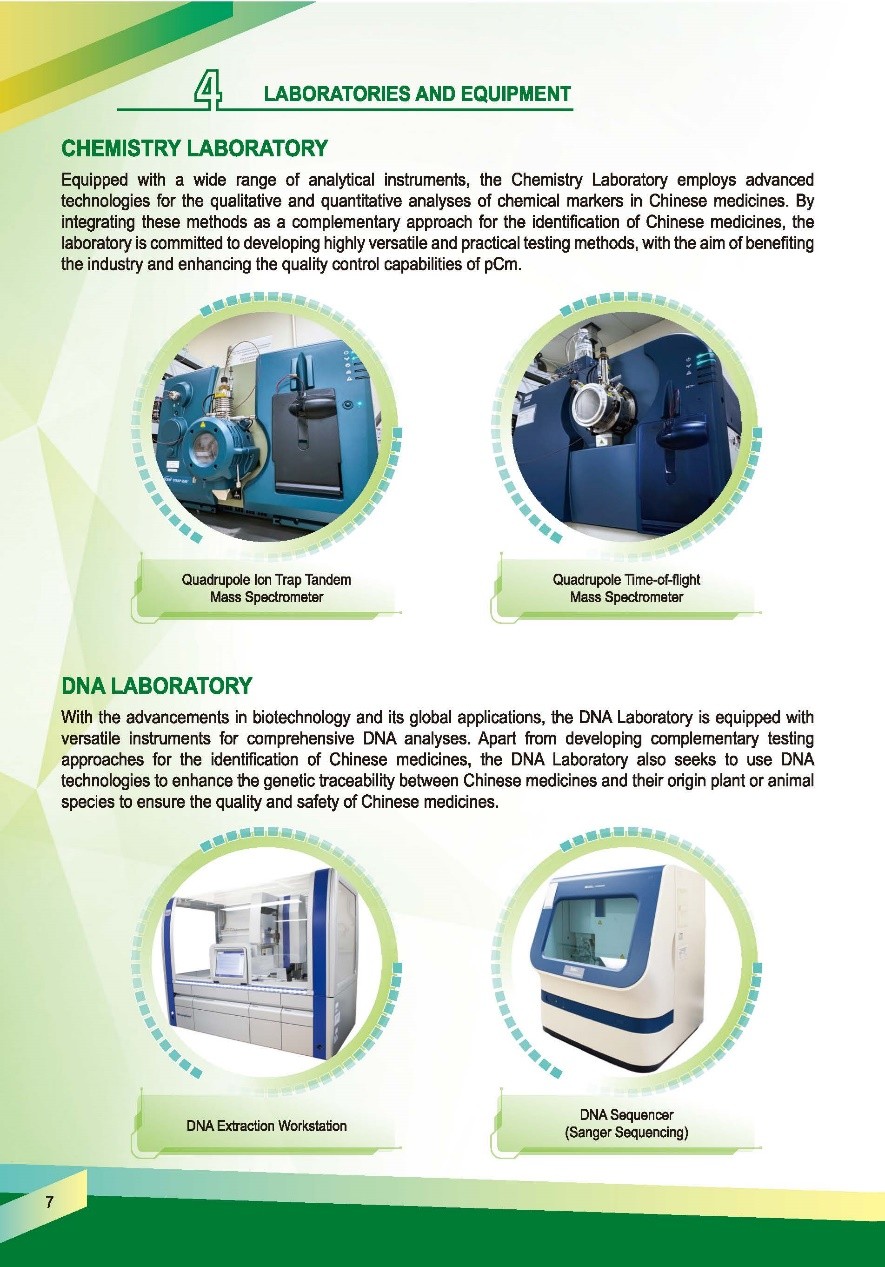
CHEMISTRY LABORATORY
Quadrupole Ion Trap Tandem Mass Spectrometer
Quadrupole Time-of-flight Mass Spectrometer
DNA LABORATORY
DNA Extraction Workstation
DNA Sequencer (Sanger Sequencing)
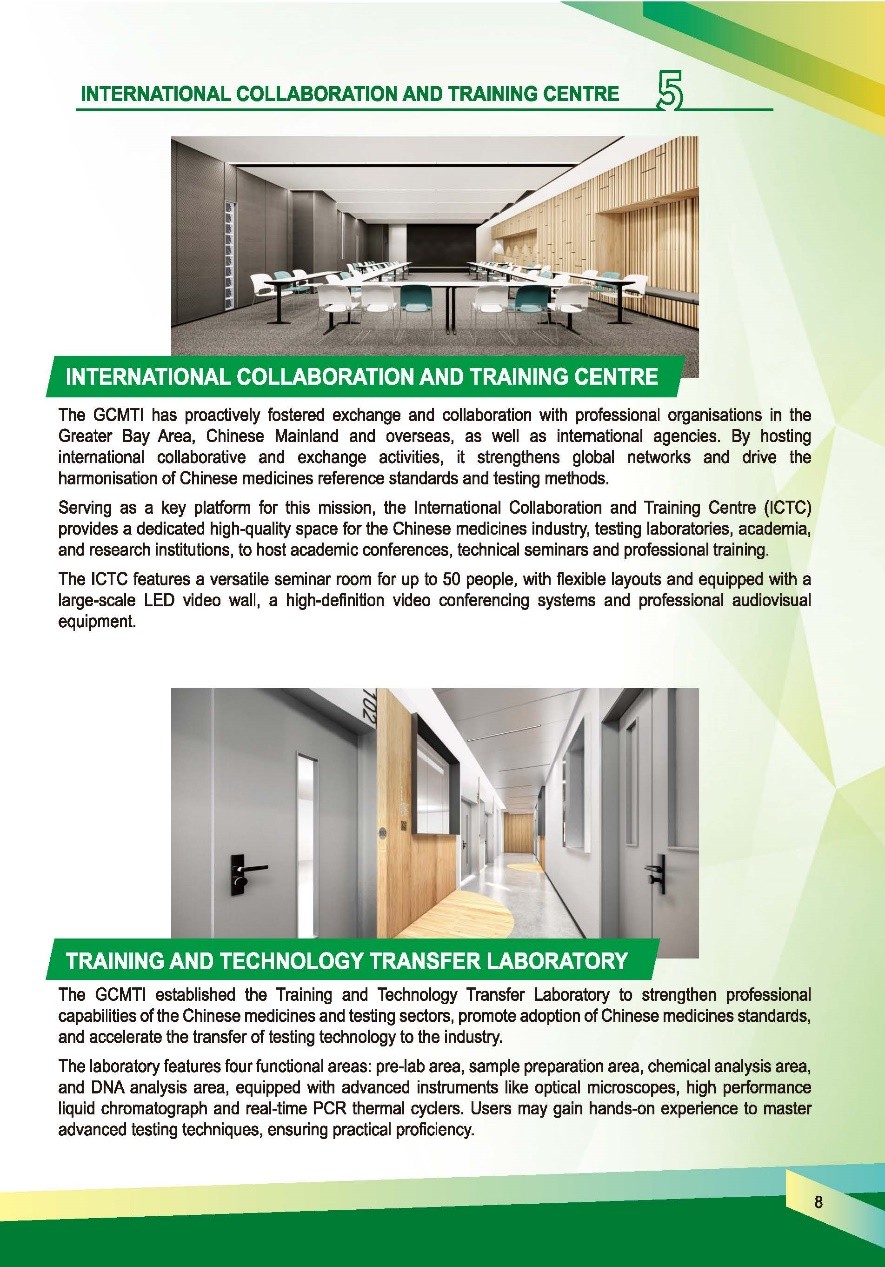
INTERNATIONAL COLLABORATION AND TRAINING CENTRE
INTERNATIONAL COLLABORATION AND TRAINING CENTRE
Serving as a key platform for this mission, the International Collaboration and Training Centre (ICTC) provides a dedicated high-quality space for the Chinese medicines industry, testing laboratories, academia, and research institutions, to host academic conferences, technical seminars and professional training.
The ICTC features a versatile seminar room for up to 50 people, with flexible layouts and equipped with a large-scale LED video wall, a high-definition video conferencing systems and professional audiovisual equipment.
The laboratory features four functional areas: pre-lab area, sample preparation area, chemical analysis area, and DNA analysis area, equipped with advanced instruments like optical microscopes, high performance liquid chromatograph and real-time PCR thermal cyclers. Users may gain hands-on experience to master advanced testing techniques, ensuring practical proficiency.
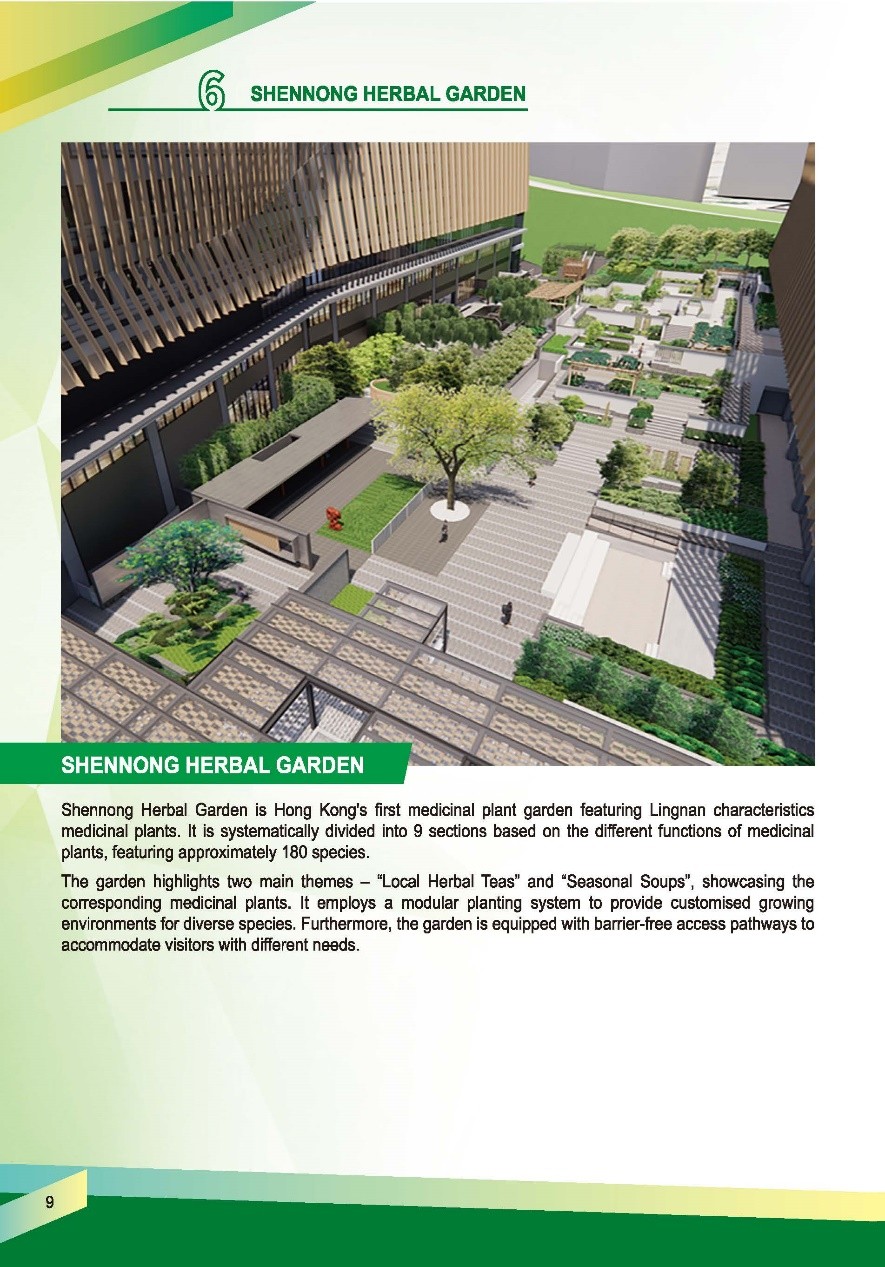
SHENNONG HERBAL GARDEN
SHENNONG HERBAL GARDEN
The garden highlights two main themes – “Local Herbal Teas” and “Seasonal Soups”, showcasing the corresponding medicinal plants. It employs a modular planting system to provide customised growing environments for diverse species. Furthermore, the garden is equipped with barrier-free access pathways to accommodate visitors with different needs.
ACCOMPLISHIMENTS
STANDARD SETTING AND THEMATIC PROJECTS
- To provide applicable and adoptable reference for the Chinese materia medica trade;
- To ensure the safety and quality of Chinese materia medica in protection of public health;
- To harmonise with the international standards; and
- To facilitate the trade in Chinese medicines.
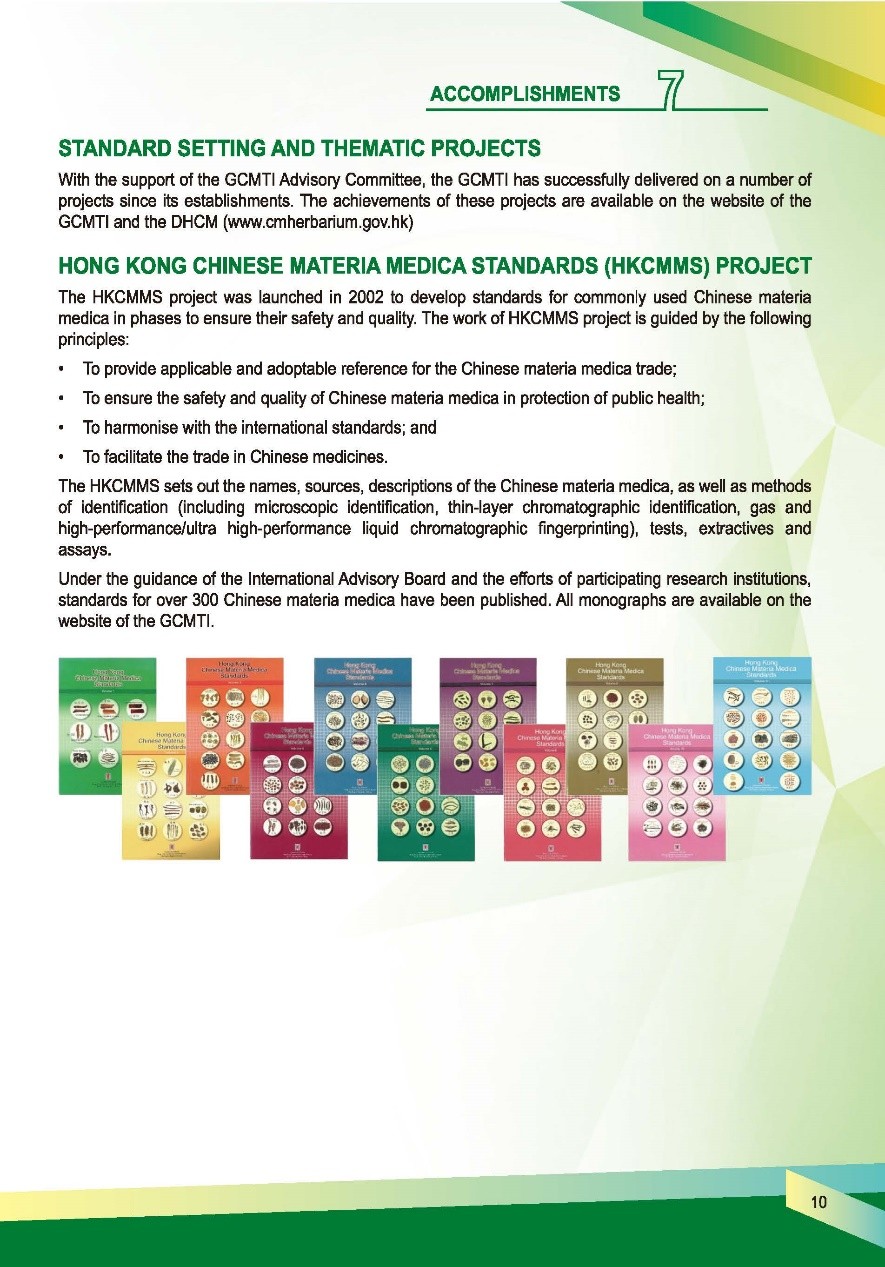
The HKCMMS sets out the names, sources, descriptions of the Chinese materia medica, as well as methods of identification (including microscopic identification, thin-layer chromatographic identification, gas and high-performance/ultra high-performance liquid chromatographic fingerprinting), tests, extractives and assays.
Under the guidance of the International Advisory Board and the efforts of participating research institutions, standards for over 300 Chinese materia medica have been published. All monographs are available on the website of the GCMTI.
ACCOMPLISHIMENTS
NATIONAL SURVEY OF CHINESE MATERIA MEDICA RESOURCES (HONG KONG REGION)
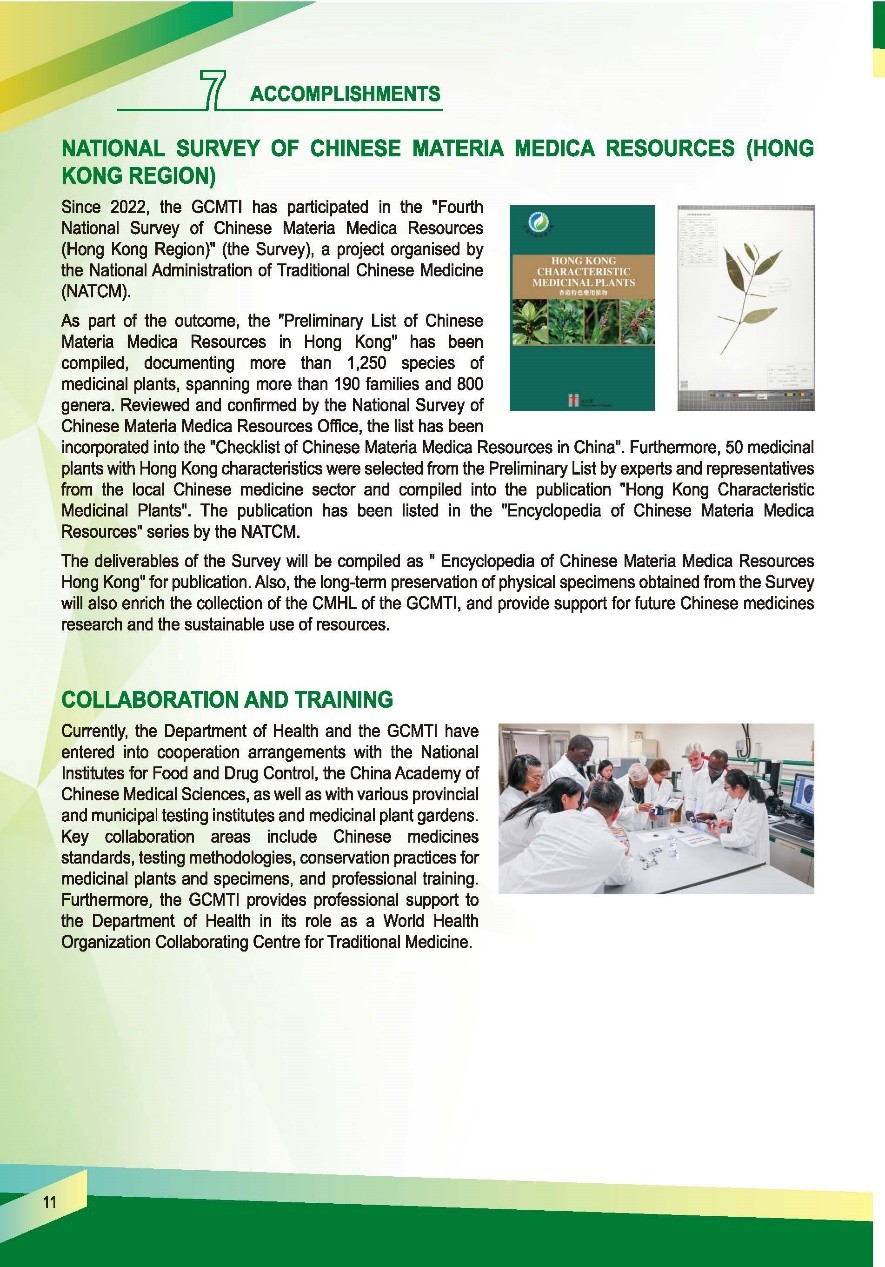
As part of the outcome, the "Preliminary List of Chinese Materia Medica Resources in Hong Kong" has been compiled, documenting more than 1,250 species of medicinal plants, spanning more than 190 families and 800 genera. Reviewed and confirmed by the National Survey of Chinese Materia Medica Resources Office, the list has been incorporated into the "Checklist of Chinese Materia Medica Resources in China". Furthermore, 50 medicinal plants with Hong Kong characteristics were selected from the Preliminary List by experts and representatives from the local Chinese medicine sector and compiled into the publication "Hong Kong Characteristic Medicinal Plants". The publication has been listed in the "Encyclopedia of Chinese Materia Medica Resources" series by the NATCM.
The deliverables of the Survey will be compiled as " Encyclopedia of Chinese Materia Medica Resources Hong Kong" for publication. Also, the long-term preservation of physical specimens obtained from the Survey will also enrich the collection of the CMHL of the GCMTI, and provide support for future Chinese medicines research and the sustainable use of resources.