Chinese Medicine Regulatory Office
Site Menu
Study on the Identification of Sinopodophylli Radix et Rhizoma and its Confused Species by DNA Method
Disclaimer
- Precaution
These methods may involve the use of hazardous materials and dangerous goods. It is the user’s responsibility to apply appropriate precaution when handling such materials. Use eye and hand protection and where necessary carry out the work in a fume cupboard. - Method and commercial products
- It is the user’s responsibility to assess the suitability of the testing items when adopting the testing methods.
- Any name of brand, suppliers and manufacturer for a particular products appeared in the method just reflected the real situation that they were used during the method development. There are no implications, endorsement, certification and preference to favour any particular products. Similar products of other brand names may also be used and users should evaluate their performance and efficacy on the testing methods.
- The users of the testing methods should possess adequate knowledge and laboratory techniques to perform analyses using the testing methods. They should understand any potential danger or hazards arising from the tests. The users should also read the material safety data sheet (MSDS) and access the risks and danger before performing the analysis.
- The information in this method may be re-disseminated or reproduced, provided that the Government Chinese Medicines Testing Institute (GCMTI), as the source of information, is acknowledged and that the re-dissemination or reproduction is for non-commercial use. Any other reproduction, adaptation, distribution, dissemination or making available of the information in this method for commercial use is strictly prohibited unless prior written authorizations obtained from the GCMTI.
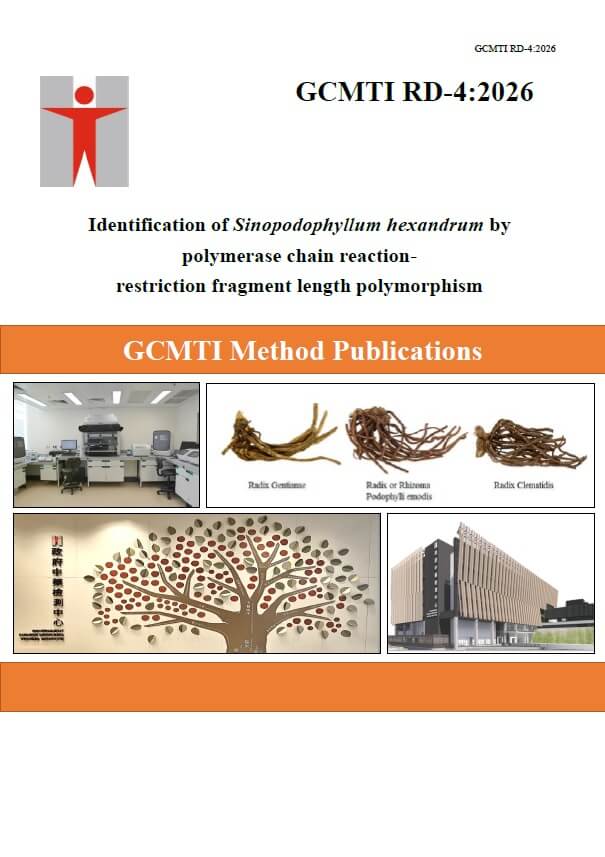
GCMTI RD-4:2026
Identification of Sinopodophyllum hexandrum by polymerase chain
reaction-restriction fragment length polymorphism